Tour of Flanders Iconic Climbs
Stefaan Rogiers takes us into the heart of the Tour of Flanders, having grown up surrounded by these iconic climbs that have shaped this race. Stefaan’s passion for this race and his home country is unmatched, and he loves nothing more than to share this passion with our guests on Tour. Take a moment to read through his history of the iconic climbs and ready yourself for our Ultimate Spring Classics Tour.
History Is Written By The Cobbles: The Best Climbs of the Tour of Flanders
In Flanders, cycling is more than a sport. It is heritage, pride, and identity. Every Spring, the Tour of Flanders turns narrow farm roads and medieval villages into a theatre, where legends are forged on stone. The cobbles decide everything. They reward courage, punish hesitation, and remind everyone that history in cycling is written not only by heroes, but by the roads beneath their wheels.
From the roar of the crowds packed shoulder-to-shoulder on brutal gradients, to the echo of carbon rims rattling over ancient stone, these climbs shape the race like no other.
Below are the most defining climbs of the Ronde — each with its own character, scars, and unforgettable stories.
Oude Kwaremont – Pogi’s Climb
Length: 2.2 km
Average gradient: 4 percent (max 11 percent)
Surface: Mostly cobbled
The longest cobbled climb in the race, Oude Kwaremont may not appear intimidating on paper. It is not the steepest, nor the roughest, but it drains the legs like few others. The false-flat section in the centre feels endless, and when the crowds close in, the energy is electric.
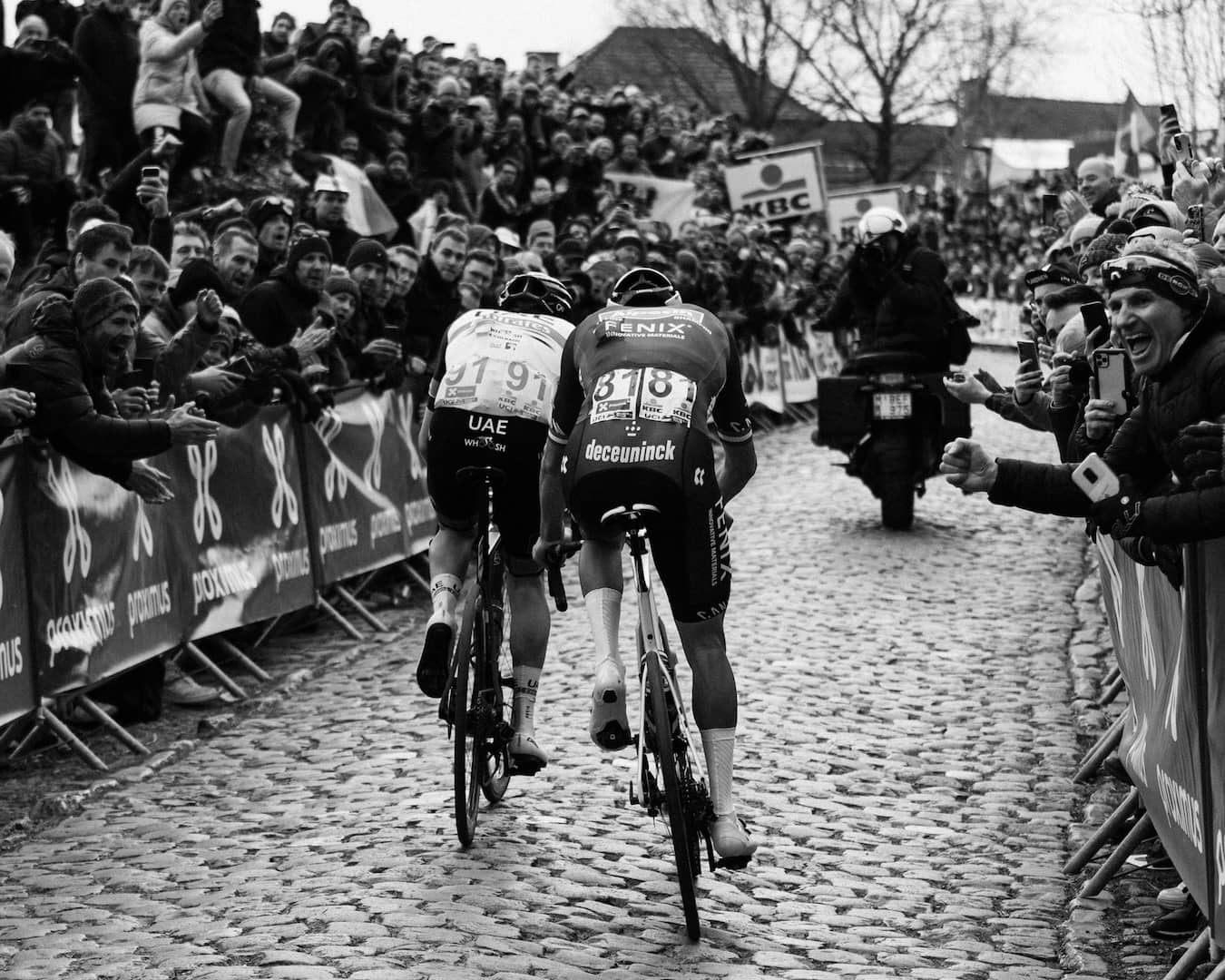
Ridden three times during the race, the Kwaremont is always decisive, and in recent years it has become Tadej Pogačar’s favourite place to make the race explode.
Throwback
In 2022, on both the second and third ascents, Pogačar set a blistering pace, shedding almost the entire field — even momentarily dropping Mathieu van der Poel. The pair crested the Paterberg together, though they were later caught, and Pogačar was boxed in during the sprint. The Kwaremont showed his sheer dominance, but also proved that Flanders is never only about power. Positioning and tactics still rule here.
Paterberg – Small but Fierce
Length: 350 m
Average gradient: 12.9 percent (max 20.3 percent)
Surface: Fully cobbled
Short, steep and savage. With a tight 90-degree turn leading directly onto the slope, the Paterberg demands timing and nerve. Riders hit the base already deep in the red, and every pedal stroke feels like lifting concrete blocks.
Since 2012 the Paterberg has been the final climb with just 13.3 kilometres to go, making it the perfect launchpad for late attacks. If you still have anything left, this is where you try.
Throwback
In 2016, Peter Sagan launched a devastating attack here, dropping Sep Vanmarcke and powering away alone in the rainbow jersey to take his first monument victory. A defining moment in modern cycling.
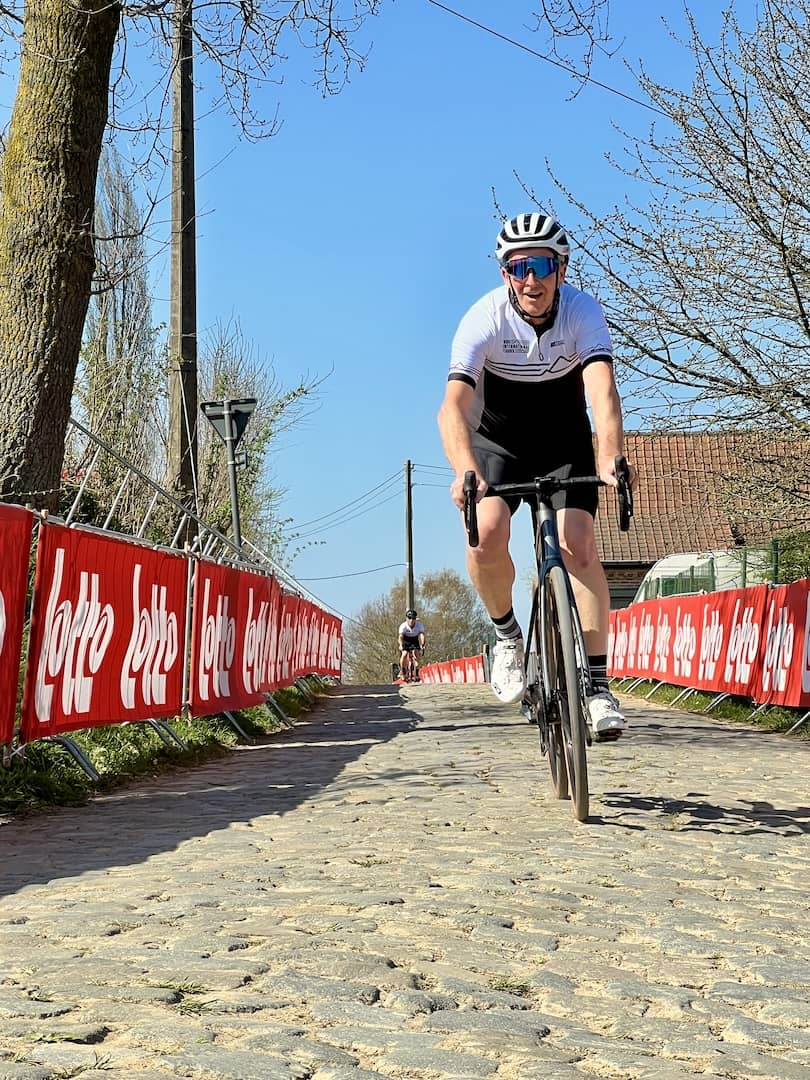
Koppenberg – The Most Feared of Them All
Length: 600 m
Average gradient: 11.6 percent (max 22 percent)
Surface: Cobbled, uneven, brutal
Narrow, slippery, and legendary. The Koppenberg is a climb that strikes fear through the peloton. Wet weather transforms it into a battlefield, where even the strongest riders can lose traction and stall. More than any other, it demands perfect positioning long before the base.
If you start too far back, your race may be over before the top.
Throwback
In 1987, Jesper Skibby crashed on the Koppenberg and was nearly run over by the race director’s car — a moment so shocking that the climb was removed from the race for years. It returned in 2002, restored and reinforced, and remains one of the most atmospheric and important points in the race.
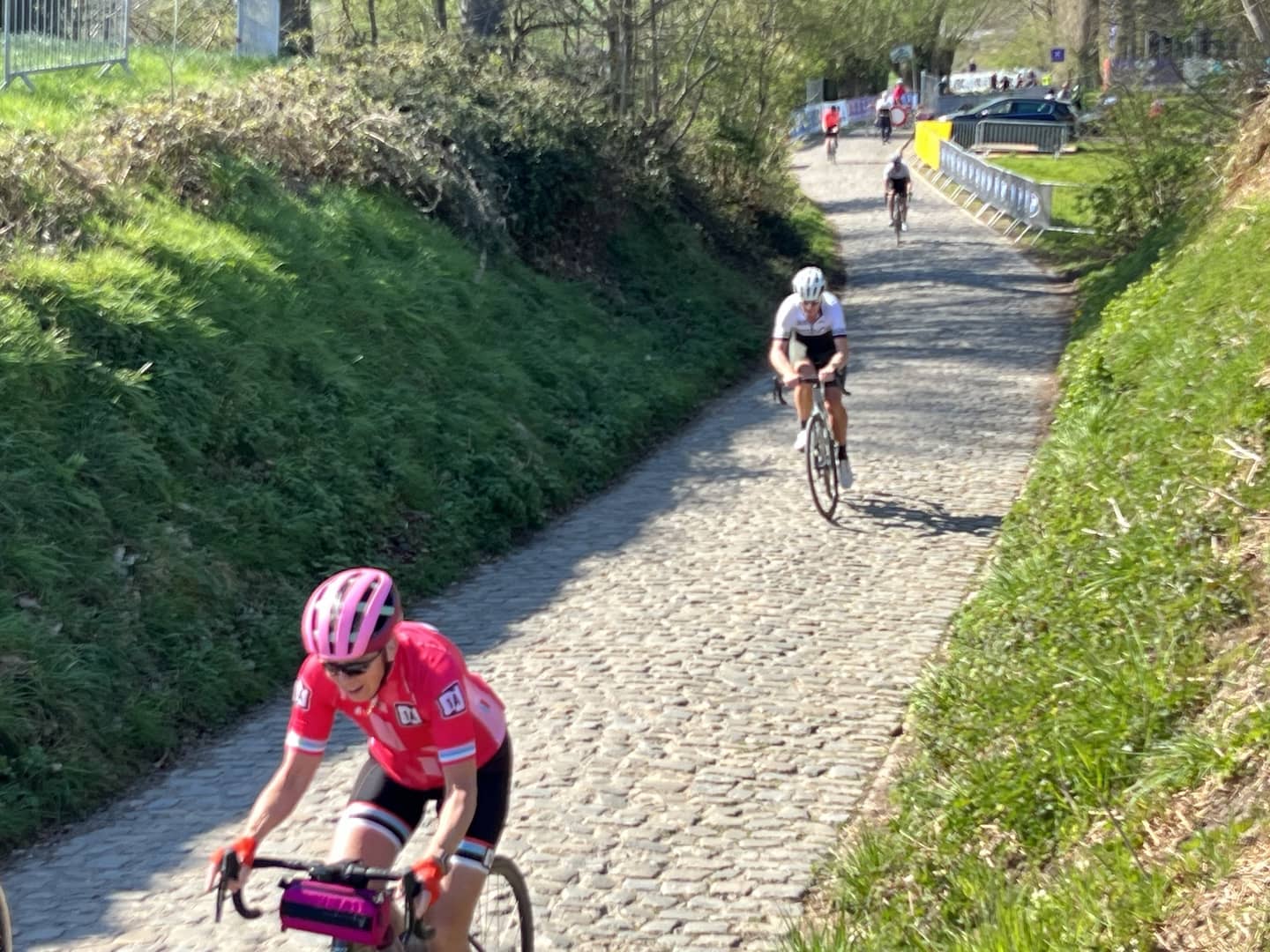
Taaienberg – Boonen’s Climb
Length: 530 m
Average gradient: 6.6 percent (max 15.8 percent)
Surface: Cobbled
Literally translated as the tough or chewy climb, the Taaienberg earns its name. It is where the first major selection often takes place, and where the race begins to take shape.
It is forever linked to Tom Boonen, who used it again and again to test his legs and split the race.
Throwback
In 2012, Boonen lit up the Taaienberg with a furious acceleration, causing a decisive breakaway that shaped the closing stages. He went on to win his third Ronde — his favourite race, on his favourite climb.
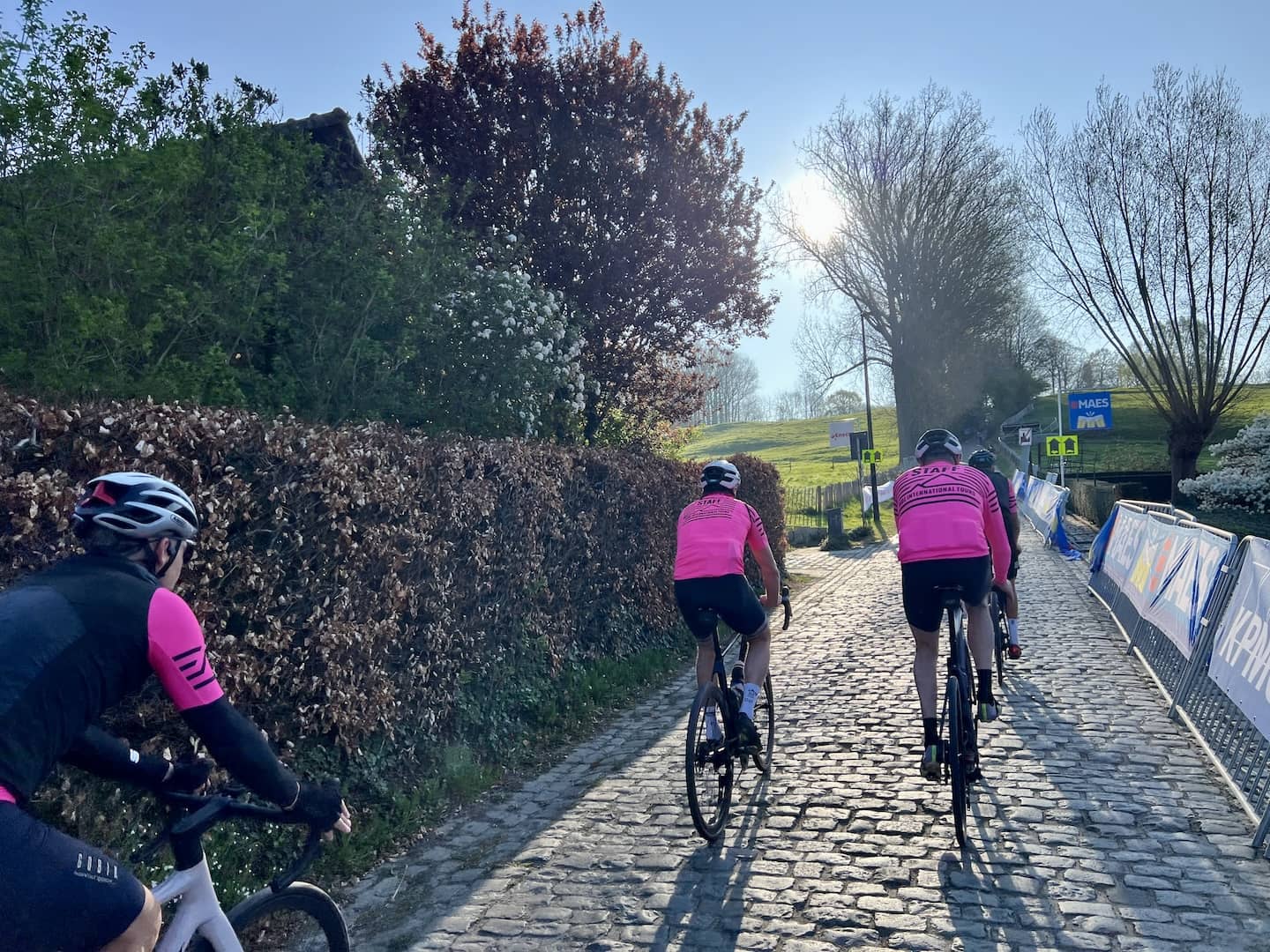
Muur van Geraardsbergen – The Wall
Length: 1.1 km
Average gradient: 9.3 percent (max 20 percent)
Surface: Cobbled
The most iconic climb in Flanders. The winding road up through the forest and past the chapel creates one of the most poetic visuals in cycling. It is to Flanders what Alpe d’Huez is to the Tour de France.
Although it is no longer the final key climb since the finish moved to Oudenaarde, the myth remains untouched. The Muur still defines hearts and breaks dreams.
Throwback
In 2010, Fabian Cancellara dropped Tom Boonen with a seated acceleration that stunned everyone watching. That attack became instant race folklore and delivered Cancellara’s first Ronde victory.
Join The Next Tour
The Tour of Flanders is not won by chance. It is won by courage, by positioning, by legs forged in winter, and by respect for the stones that have shaped a century of cycling history.
Every metre matters. Every mistake costs. Every climb tells a story.
At Flanders, the cobbles decide who becomes a legend.
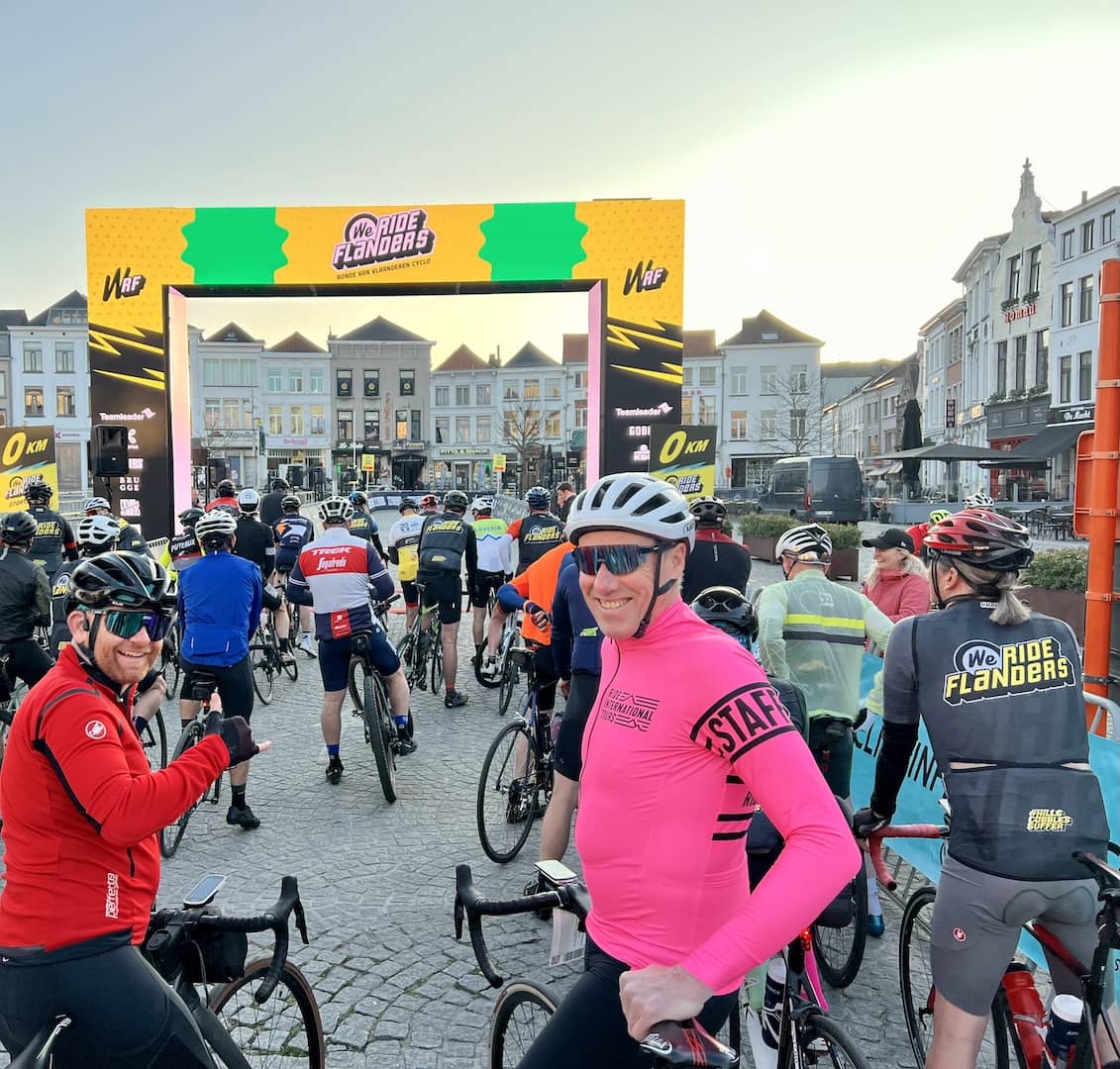
If you’re ready to experience these iconic roads for yourself and be part of cycling history, don’t miss the chance to join our upcoming tours. Whether you’re aiming to tackle the famous climbs or soak in the electric atmosphere of the Spring Classics, we’ve got the perfect tour for you.
Join us for the ultimate experience — Book your spot now for the VIP 4-Day Flanders Long Weekend 2026 or explore all of our Spring Classics tours..
We hope you all had a great holiday season in your part of the world!